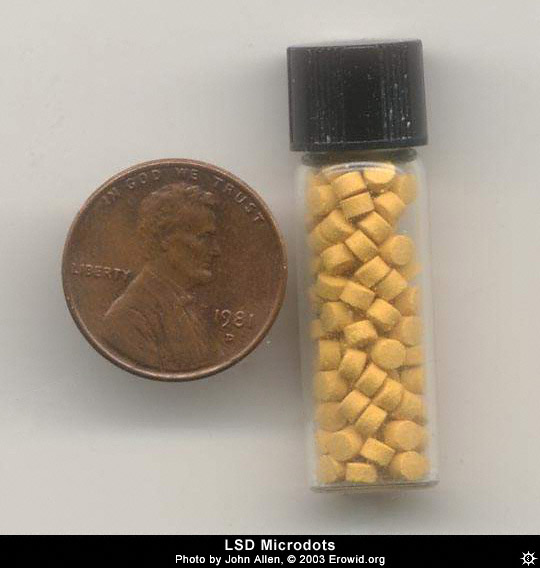
What is LSD?
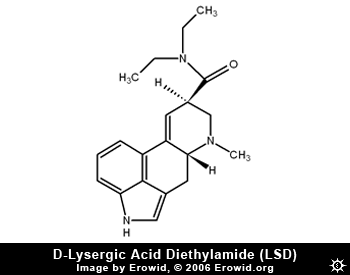
LSD is a semisynthetic hallucinogenic drug derived from ergot, known for its powerful psychological effects and serotonergic activity. It was historically used in psychiatry and 1960s counterculture; it is currently legally restricted but experiencing renewed scientific interest and increasing use.
Swiss chemist Albert Hofmann first synthesized LSD in 1938 and discovered its powerful psychedelic effects in 1943 after accidental ingestion. It became widely studied in the 1950s and 1960s. It was initially explored for psychiatric use due to its structural similarity to serotonin and safety profile. It was used experimentally in psychiatry for treating alcoholism and schizophrenia. By the mid-1960s, LSD became central to the youth counterculture in places like San Francisco and London, influencing art, music, and social movements through events like Acid Tests and figures such as Owsley Stanley and Michael Hollingshead. Its psychedelic effects inspired distinct visual art styles, music innovations, and caused a lasting cultural impact. However, its association with the counterculture movement of the 1960s led to its classification as a Schedule I drug in the U.S. in 1970. It was also listed as a Schedule I controlled substance by the United Nations in 1971 and remains without approved medical uses.
Dosing
LSD is an extraordinarily potent substance, and is one of the most potent psychoactive drugs known. This means that it produces its pharmacological effects at very small doses, with its dose range measured in micrograms (μg); that is, millionths of a gram. Noticeable effects can occur with doses of LSD as low as 20 μg, which is around 1/200th the mass of a grain of sand. LSD is approximately 200 times as potent as psilocybin and 5,000 times as potent as mescaline, meaning that it produces effects of similar magnitude at 1/200 and 1/5,000 times the respective doses.
The usual dose range of LSD for psychedelic effects is 20 to 200 μg. The typical intermediate and "good effect" dose for a psychedelic experience is 100 μg (range 75–150 μg, while 20 to 50 μg is a low or "minidose" and 200 μg is a high or ego-dissolution dose. A dose range as wide as 10 to 450 μg has been reported. LSD may also be used in microdosing. In this context, it may be used at subthreshold or microdoses of less than 10 μg.
Effects
LSD (lysergic acid diethylamide) is a powerful hallucinogenic drug that profoundly alters perception, mood, and thought. Short-term effects typically begin 20–90 minutes after use and can last up to 12 hours, producing vivid sensory distortions — such as brightened colors, altered shapes, and blending of senses (e.g., “hearing” colors) — as well as a distorted sense of time and self. Users may also experience emotional changes from euphoria and heightened awareness to anxiety, paranoia, and panic. Physically, LSD can cause dilated pupils, increased heart rate and blood pressure, elevated body temperature, nausea, sweating, dry mouth, tremors, and loss of appetite. Due to its strong effects on serotonin receptors in the brain, experiences vary widely and can be unpredictable — sometimes resulting in intensely positive “good trips” or frightening “bad trips.”
In addition to these immediate effects, LSD can have longer-term risks for some people. Flashbacks or recurring perceptions — known as hallucinogen persisting perception disorder (HPPD) — can occur days, weeks, or even months after use. Repeated use also leads to rapid tolerance, meaning higher doses are needed to achieve the same effects. Although LSD isn’t considered physically addictive, its psychological impacts can be unpredictable and, in rare cases, exacerbate underlying mental health conditions or contribute to prolonged distress following a troubling experience.
